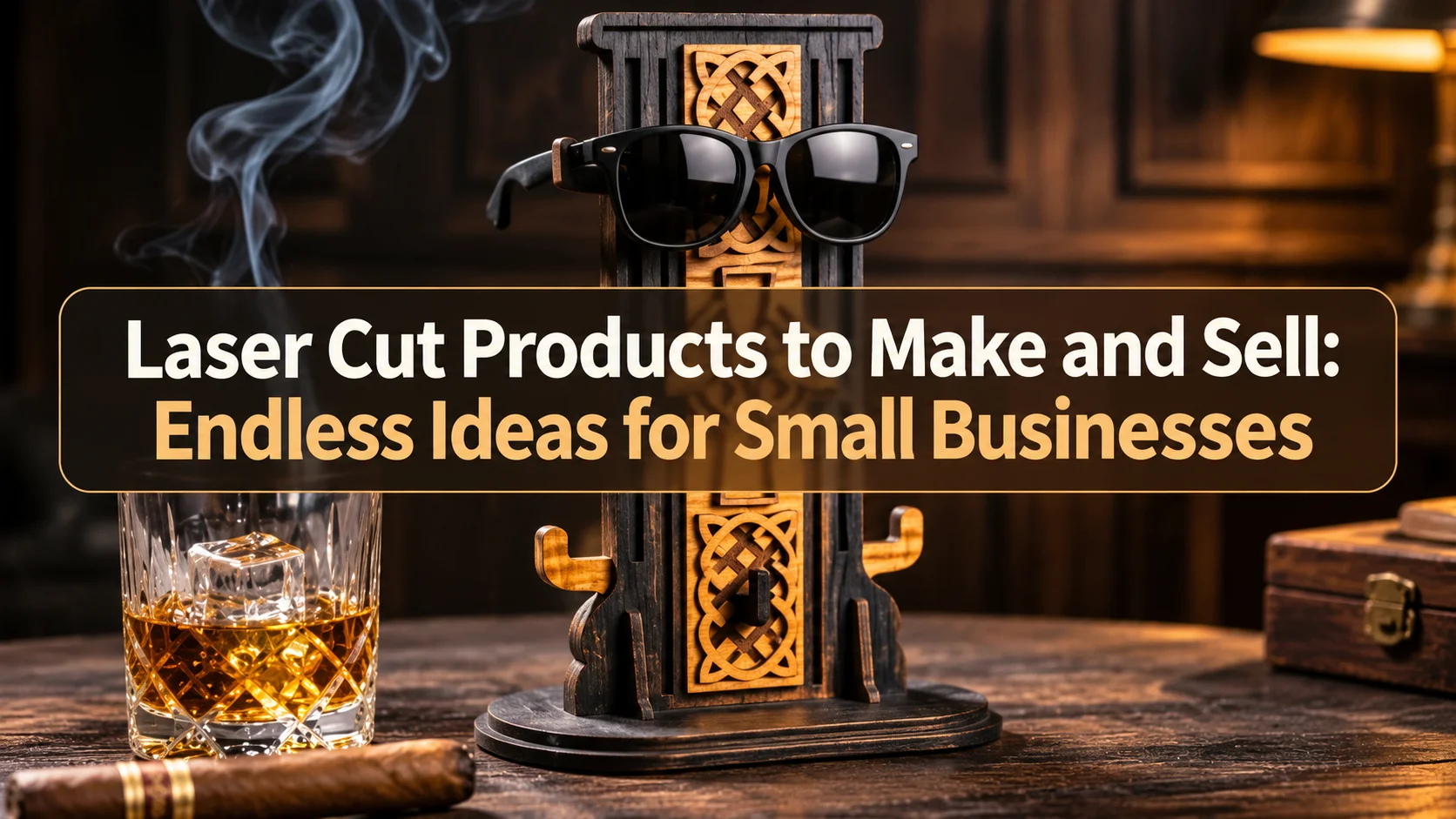
Laser Cut Products to Make and Sell: Endless Ideas for Small Businesses
A single laser cutter can become the heart of a surprisingly diverse workshop. The same machine that cuts a clean wooden jewelry display can create a fitted organizer, a family board game, or a delicate pair of earrings. Add engraving, and an ordinary serving board or slate plaque becomes something made for a particular person, occasion, or business. That flexibility is the real opportunity: one set of tools can support many different products and many different customers.
What makes laser cutting especially useful for a small business is the combination of detail, repeatability, and customization. Once a design has been tested, you can reproduce it, adjust its dimensions, change the material, add a name or logo, or develop matching products around it. A single successful design can grow into a coordinated range rather than remain a one-off project. That opens doors to online shops, craft markets, local retailers, gifts, and made-to-order work for other businesses.
The possibilities are broad, but the strongest approach is to start with a few products that solve a problem or appeal to a clear audience. The five categories below show how laser cut products to make and sell can develop into practical, recognizable product lines—with ideas for materials, customers, customization, and further design inspiration.
Laser Cut Display Stands
A display stand might seem like a minor accessory until you see what it does for the products sitting on it. A jewelry maker needs somewhere to hang earrings without tangling them. An artist wants prints arranged so customers can browse. A craft fair seller needs a tiered surface that makes small items visible from across a table. Laser cutting makes it possible to create those solutions with accurate slots, smooth curves, engraved branding, and consistent dimensions.
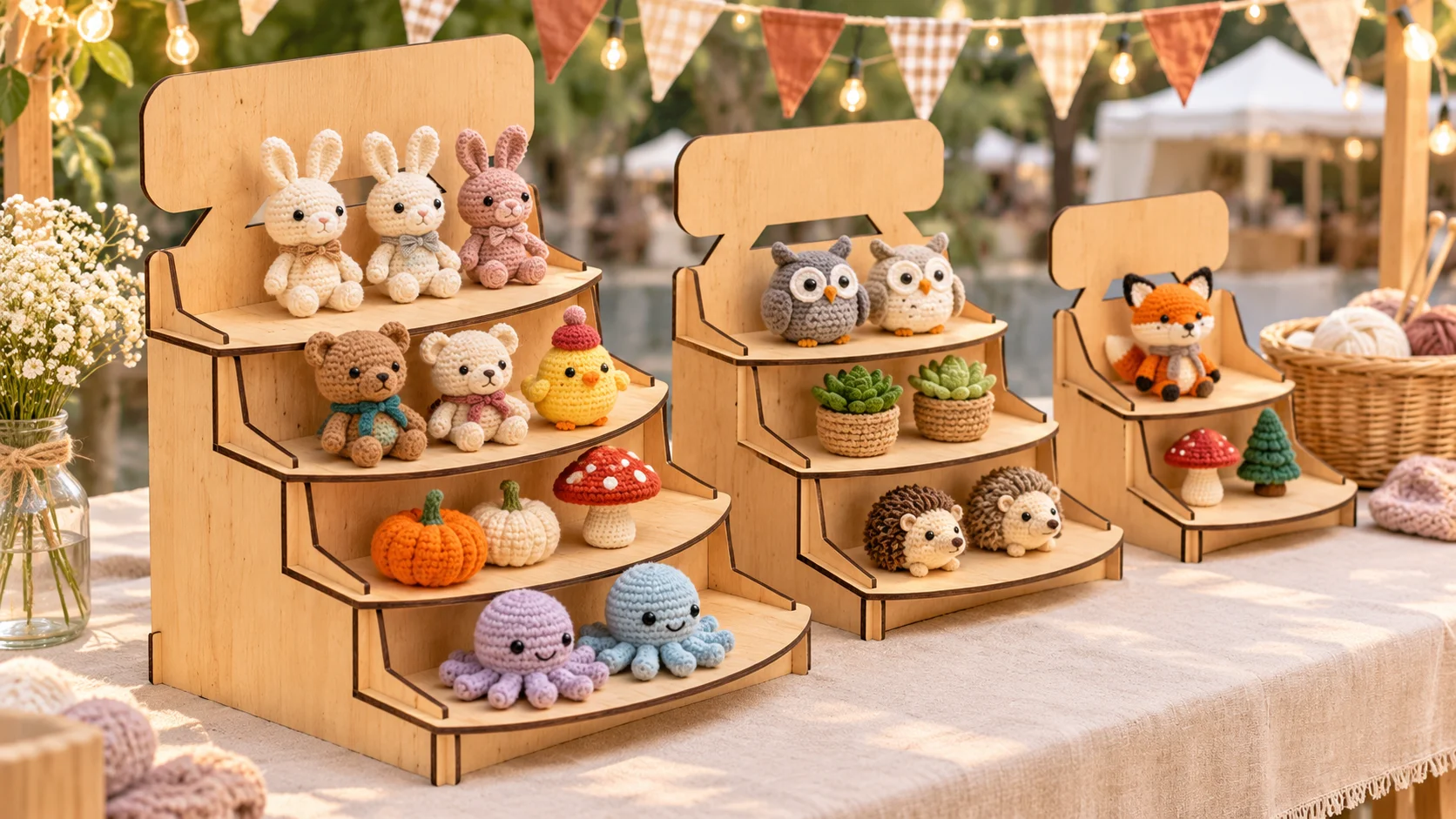
The range is far wider than jewelry stands. Think bracelet bars, necklace trees, ring holders, postcard racks, picture easels, keychain boards, rotating countertop displays, risers, and modular shelves. A small shop might prefer compact countertop fixtures for packaged products, while a weekend market vendor might need a larger setup that assembles quickly and packs flat at the end of the day. The same display concept can be adapted to candles, soaps, handmade toys, cosmetics, greeting cards, and other products.
Plywood is an excellent starting point because it offers a warm finish and is suited to tabs, slots, and engraved logos. MDF can work well for painted displays, while laser-compatible acrylic creates a more contemporary look. Material choice should follow the job: a rack holding light earrings needs different reinforcement from a stand carrying jars, bottles, or heavier merchandise. Testing stability matters just as much as getting the cuts right.
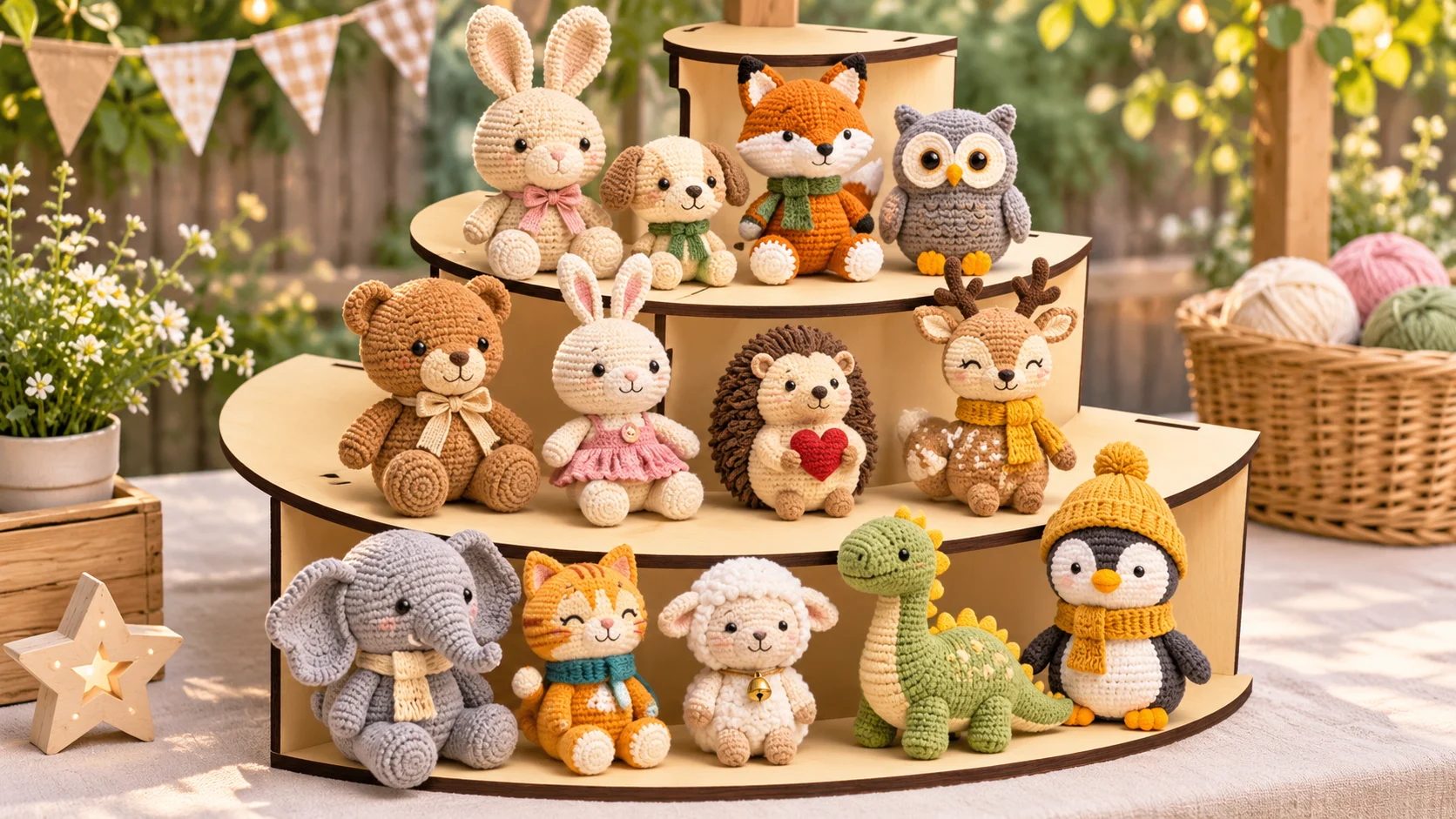
This is where the business potential becomes interesting. Rather than selling only a standard earring holder, you could offer a family of displays in three sizes, with interchangeable tops and optional engraved branding. A boutique might order a matching checkout stand and product risers. A jewelry brand might want several displays in its signature color. For traveling sellers, flat-pack and modular configurations are especially useful because storage and transport are constant concerns.
Display stands also invite repeat business. Shops change their collections, launch seasonal products, and open new stalls. Once you’ve developed a dependable construction system, modifications often involve changing a shelf width, adding a header, or rearranging compartments rather than redesigning the entire product. Simple easel-style holders and workshop fixtures can be sold individually or bundled with a larger merchandising set.
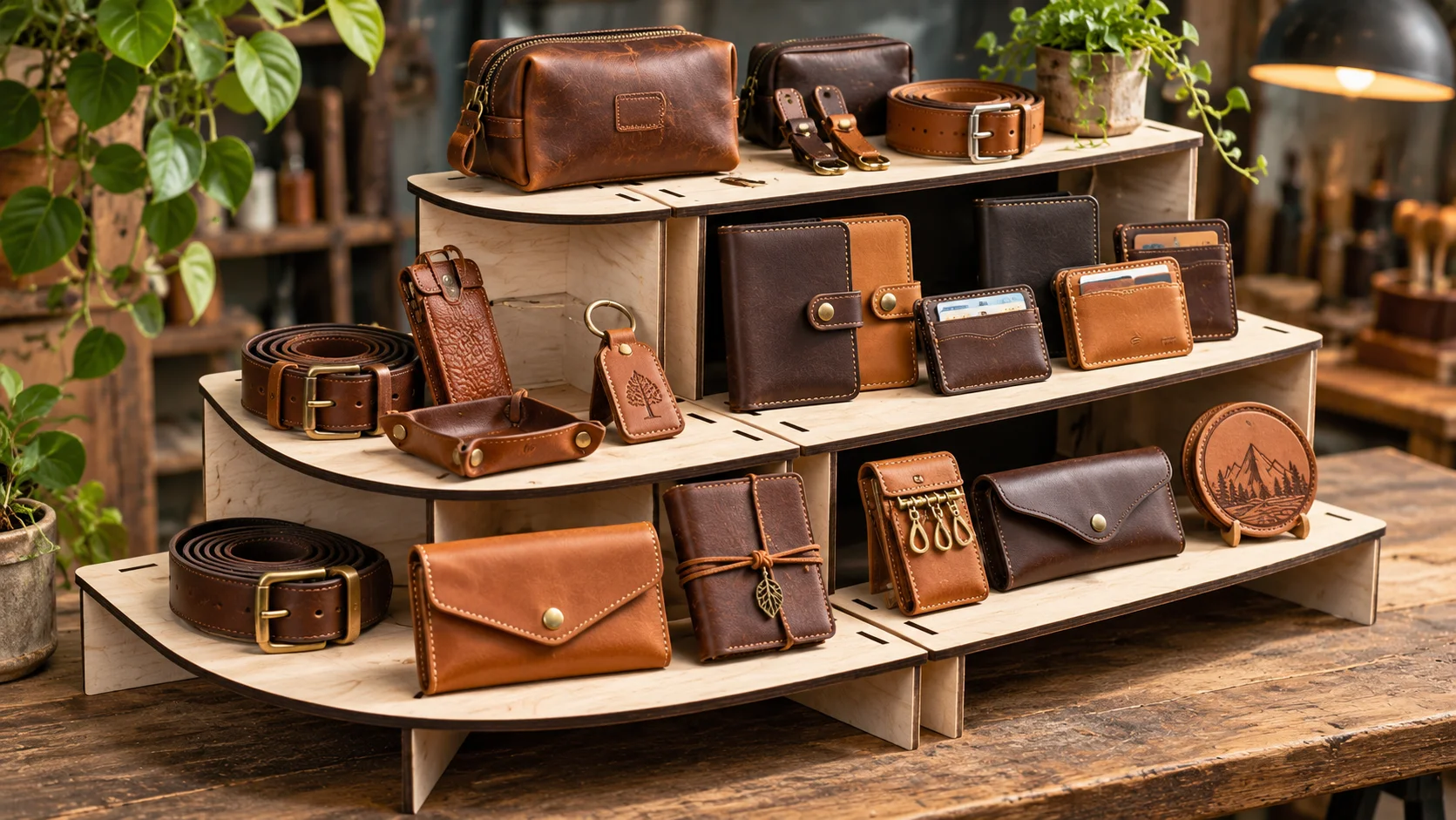
For makers who want to work with local businesses, the most valuable question is not “Which stand looks best?” but “What does this customer need to display?” A tailored answer may lead to a single custom order, a standardized range of retail and jewelry stands, or an ongoing relationship supplying fixtures as the retailer grows. This is a category where design skill, practical thinking, and personalization can matter as much as the material itself.
Laser Cut Boxes & Organizers
Storage products show another strength of laser cutting: the ability to give almost any small object a place of its own. A tabletop organizer can hold pencils and notebooks; a wall panel can keep workshop tools within reach; a custom box can protect jewelry or turn a gift into a keepsake. These products don’t rely entirely on decoration. They offer everyday usefulness, which creates opportunities to reach customers beyond the usual craft audience.
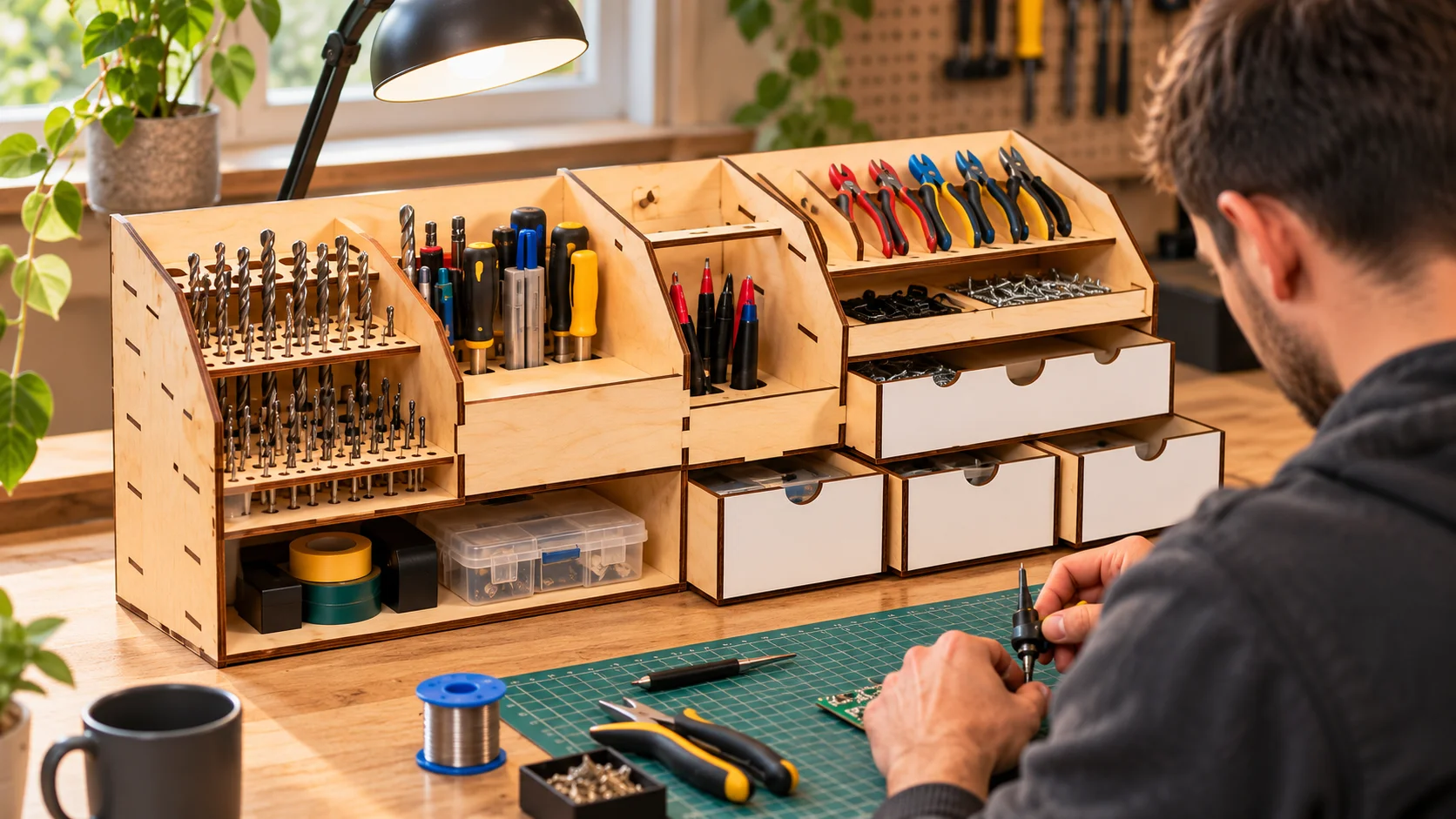
Plywood and MDF are common choices for boxes, trays, drawer dividers, tool racks, and compact shelving. The laser can cut precise interlocking joints, patterned panels, handles, engraved labels, and compartments that would be labor-intensive to make individually by hand. Birch plywood looks attractive with a clear finish; painted MDF suits colorful desk or nursery accessories. Acrylic can be added for lids and transparent dividers where the design and machine support it. The actual sheet thickness and joint fit still need to be measured and tested.
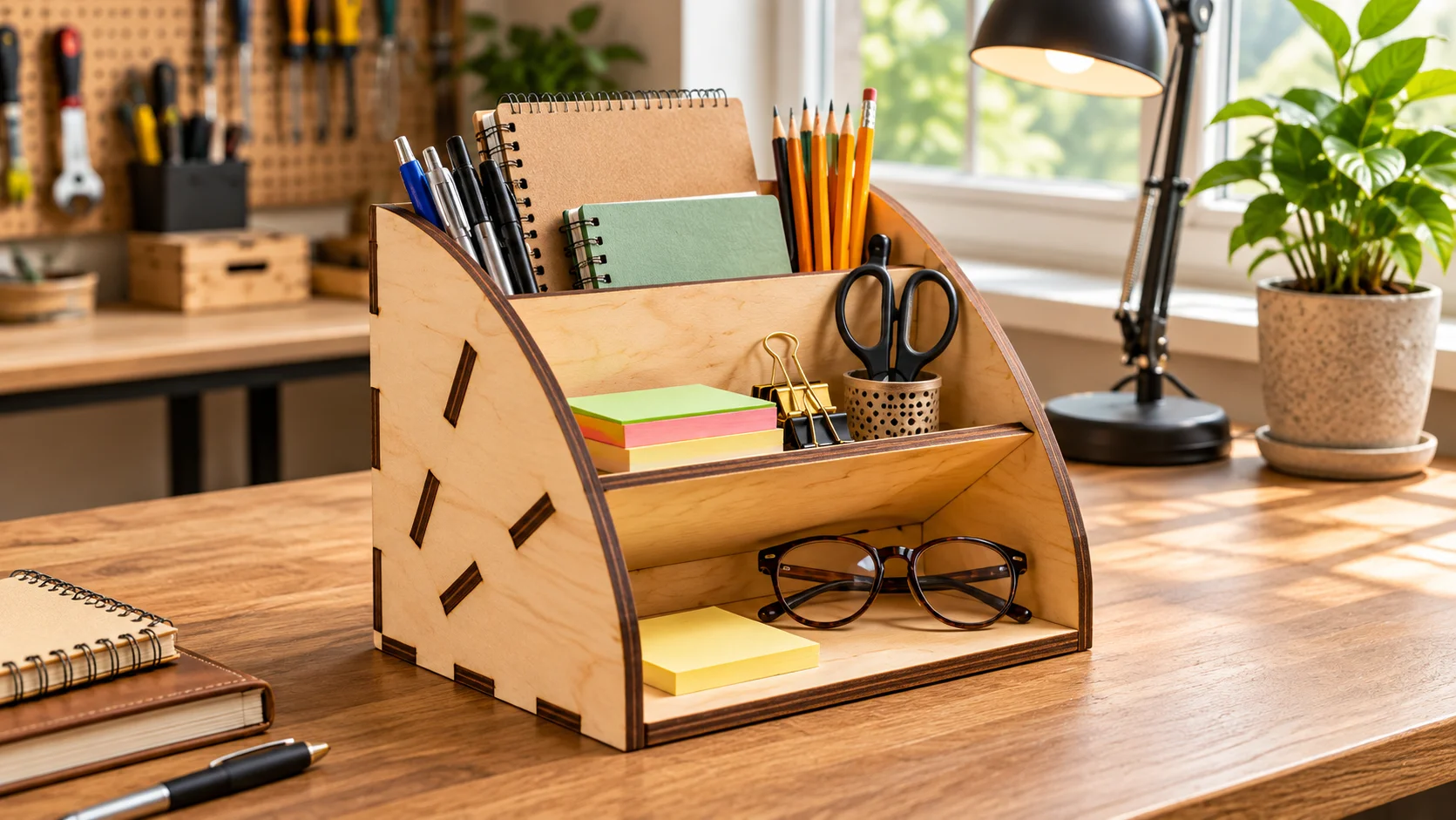
One design can evolve in several directions. Take a desktop organizer: offer it as a pen-and-notebook station for students, a brush holder for artists, a cable-and-device tray for offices, or a compact setup for craft sellers. Within home and workshop storage projects, you’ll find ideas that lend themselves to this kind of adaptation. The principle is simple: keep a dependable construction method, then customize what the compartments are meant to hold.
Gift boxes open a different market. A plain wooden case might become a memory box with a child’s name, wedding packaging with a date and monogram, or a presentation case for a handmade product. The same techniques also suit decorative household pieces: small organizers that look at home on a shelf can appeal to people who want storage without the industrial appearance of a utility box.
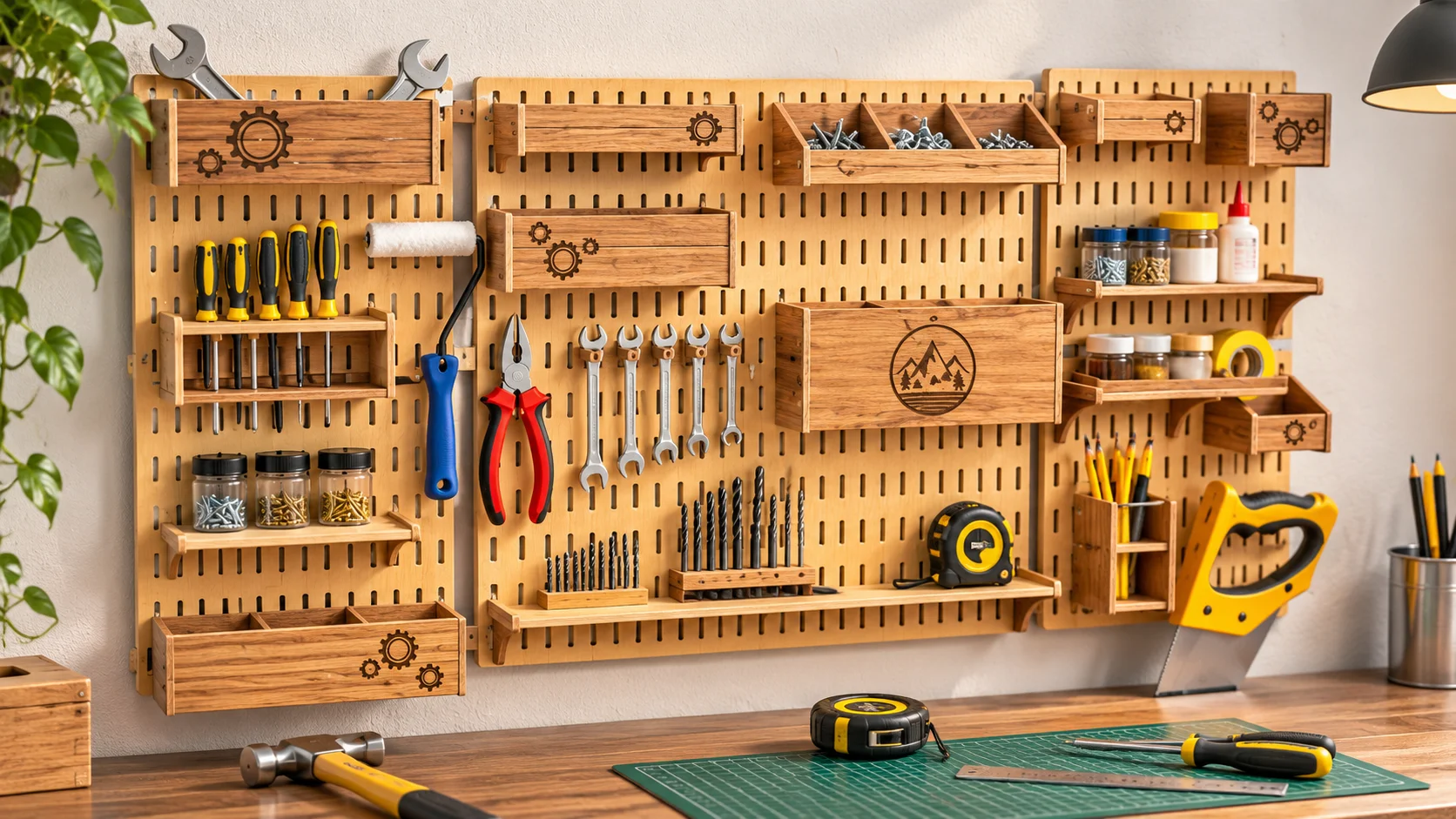
For practical buyers, size often matters more than ornament. A workshop owner wants drill bits and hand tools arranged in the right order; a home cook wants spices visible; a crafter wants storage tailored to a particular material. You can develop specific organizer formats for kitchens and worktables, then create variations for the real objects customers use. That makes measurement, ease of cleaning, and access to compartments essential design decisions.
Another route is to build systems rather than isolated pieces. A pegboard panel can accept additional shelves; a desktop module can connect to a drawer unit; a kitchen caddy can have matching spice and utensil holders. The options become more extensive when you explore different organizer layouts and component combinations or test drawer systems and workshop storage structures. Modular products give customers a reason to return when they need more storage.
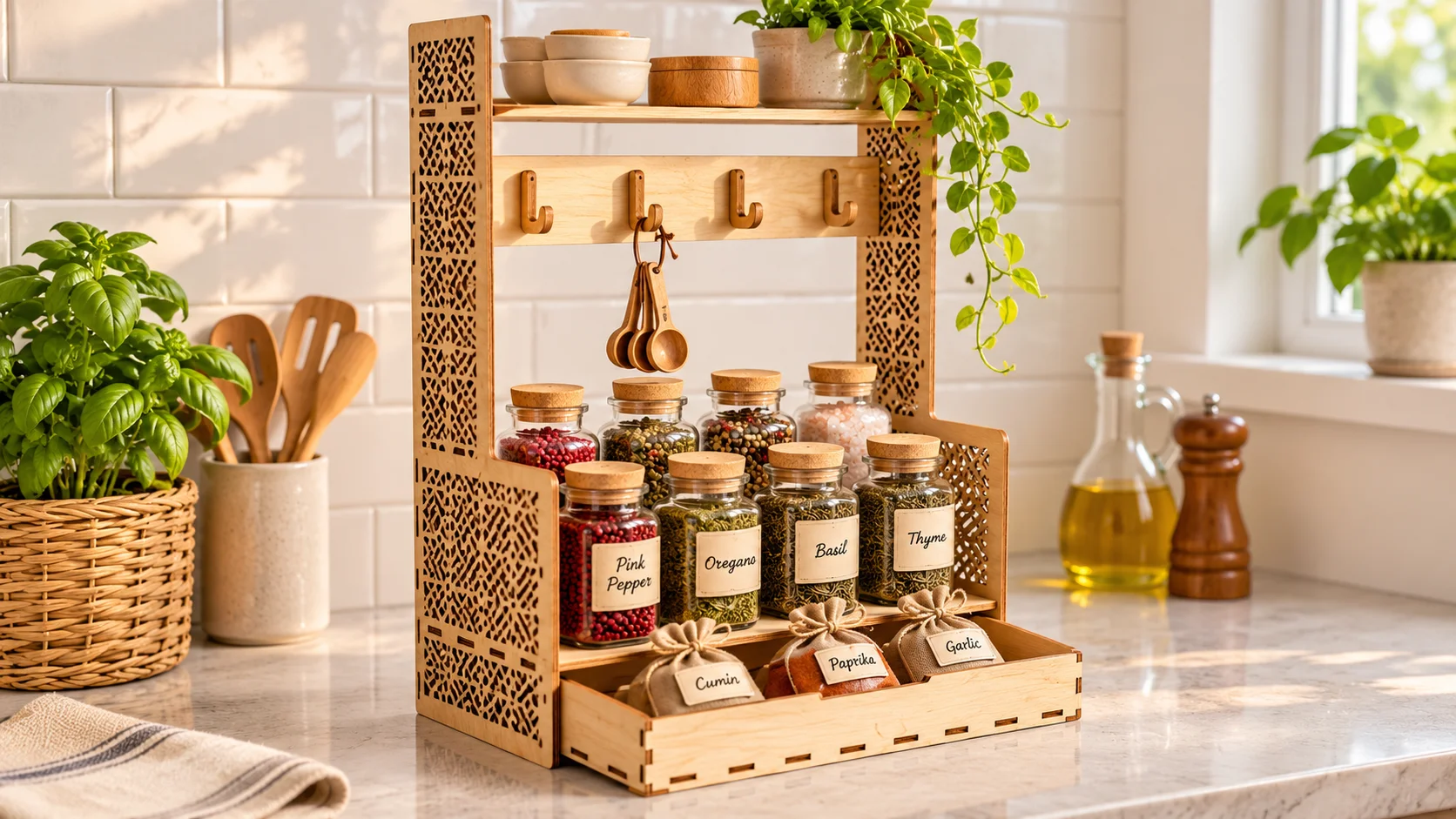
This category also makes sense for small commercial orders. Cafés need tidy counters; salons need tool holders; independent makers need packaging and storage. Products can be sized to a customer’s space and finished with a logo, a label, or a matching color. An attractive organizer may also be paired with complementary laser-cut home and gift items to create a coordinated set. The opportunity isn’t just to sell a wooden box—it’s to make something that fits the way people live or work.
Laser Cut Toys & Games
Few laser-cut categories demonstrate the creative range of a workshop as clearly as toys and games. A flat plywood sheet can become a standing board game, a colorful inset puzzle, a miniature construction model, or a set of parts that people assemble and interact with. The appeal comes from the experience as much as the object itself: children explore shapes and sequences, families play together, and hobbyists enjoy the challenge of a cleverly designed mechanism.
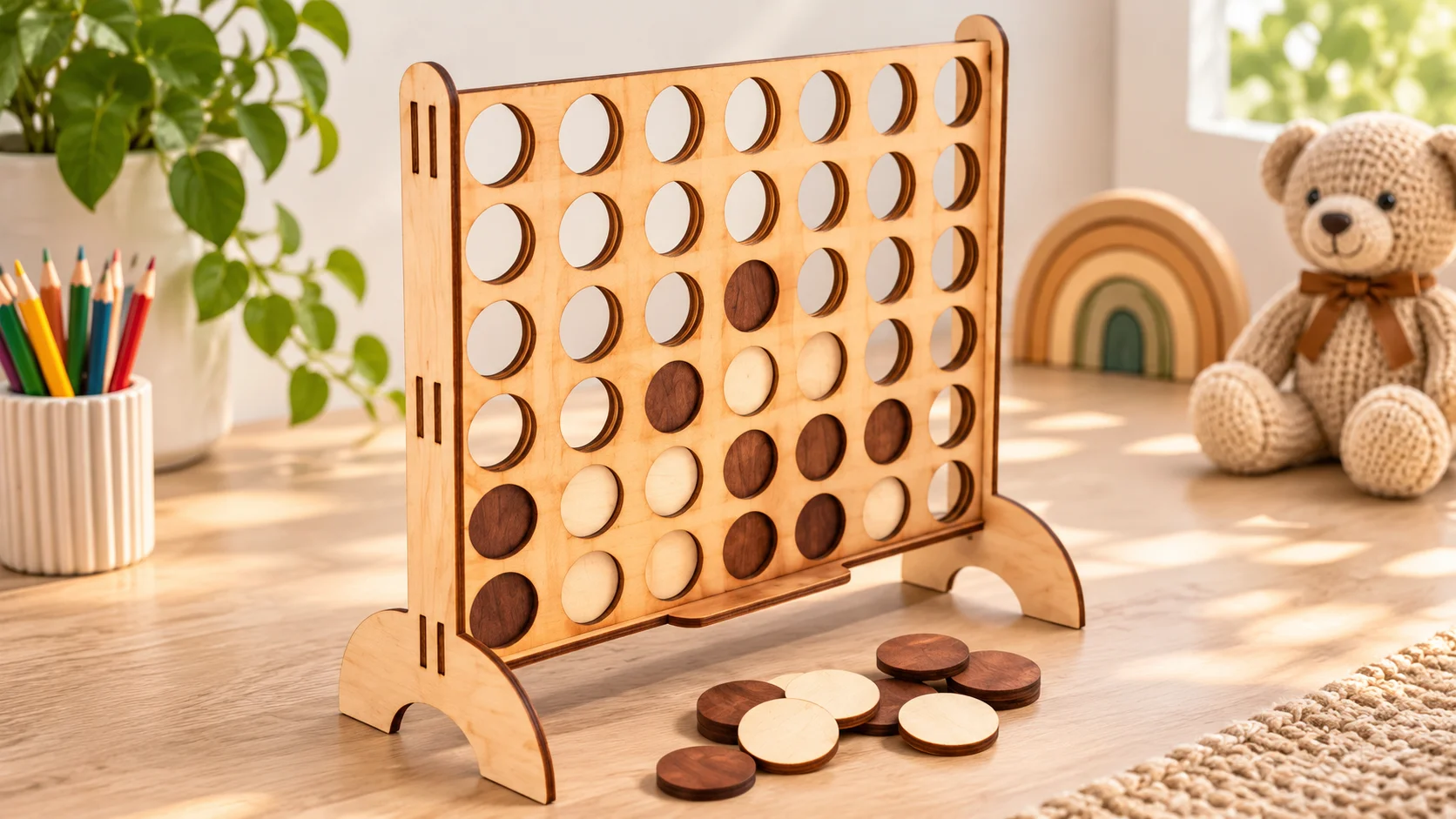
There are several distinct markets within this category. Educational products can introduce letters, numbers, matching, or spatial reasoning; tabletop games appeal to families and adults; three-dimensional models attract people who enjoy building things. A maker who develops wooden learning puzzles and hands-on activity boards can later offer related themes such as animals, vehicles, ocean life, or space. Instead of dozens of unrelated products, a carefully designed series gives the collection a recognizable style.
Birch plywood is widely used because it cuts with definition and offers a natural appearance. Painted wood can give educational pieces brighter color, while suitable acrylic can add transparent elements. The design needs to account for how people will actually use it: pieces must fit their openings, game tokens must be comfortable to handle, and moving parts need enough clearance to work smoothly. Detailed laser cutting is an advantage here, but physical testing determines whether the finished game is enjoyable.
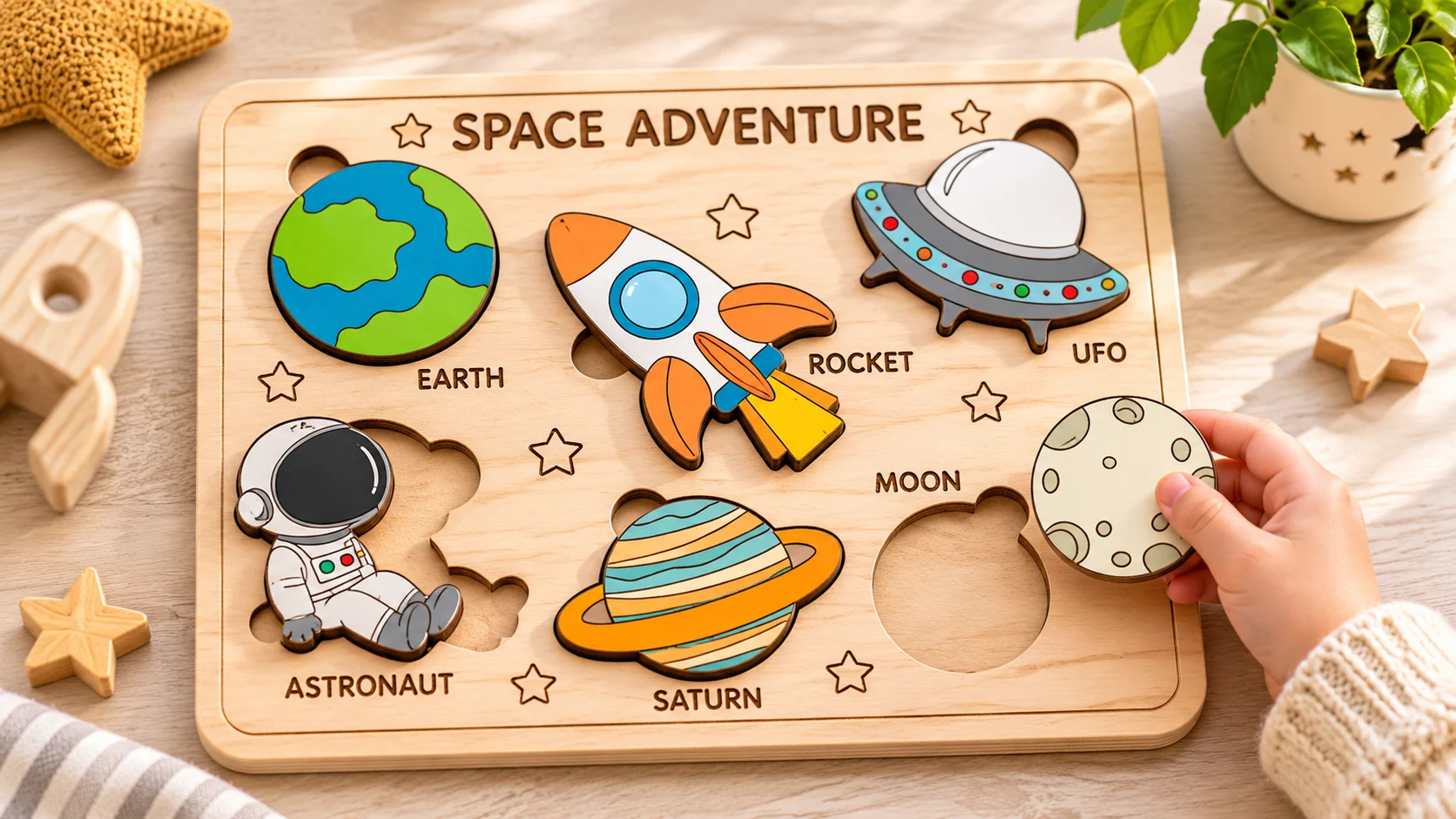
Personalization provides another creative layer. A child’s name might become part of an alphabet board; a themed puzzle could use favorite animals or planets; a matching set could include a storage box engraved for a birthday. For a maker exploring interactive wooden learning tools or animal and vehicle puzzles, this is a way to turn a basic design into a thoughtful gift without changing the entire production process.
The possibilities extend well beyond preschool toys. Chess, backgammon, dominoes, labyrinth boards, Connect Four-style games, and travel-sized strategy sets can appeal to adults, families, and gift buyers. A game with a foldable board or a well-designed storage case has advantages for travel and gifting. When paired with customizable wooden letters and symbols, even straightforward game designs can support themed or personalized editions.
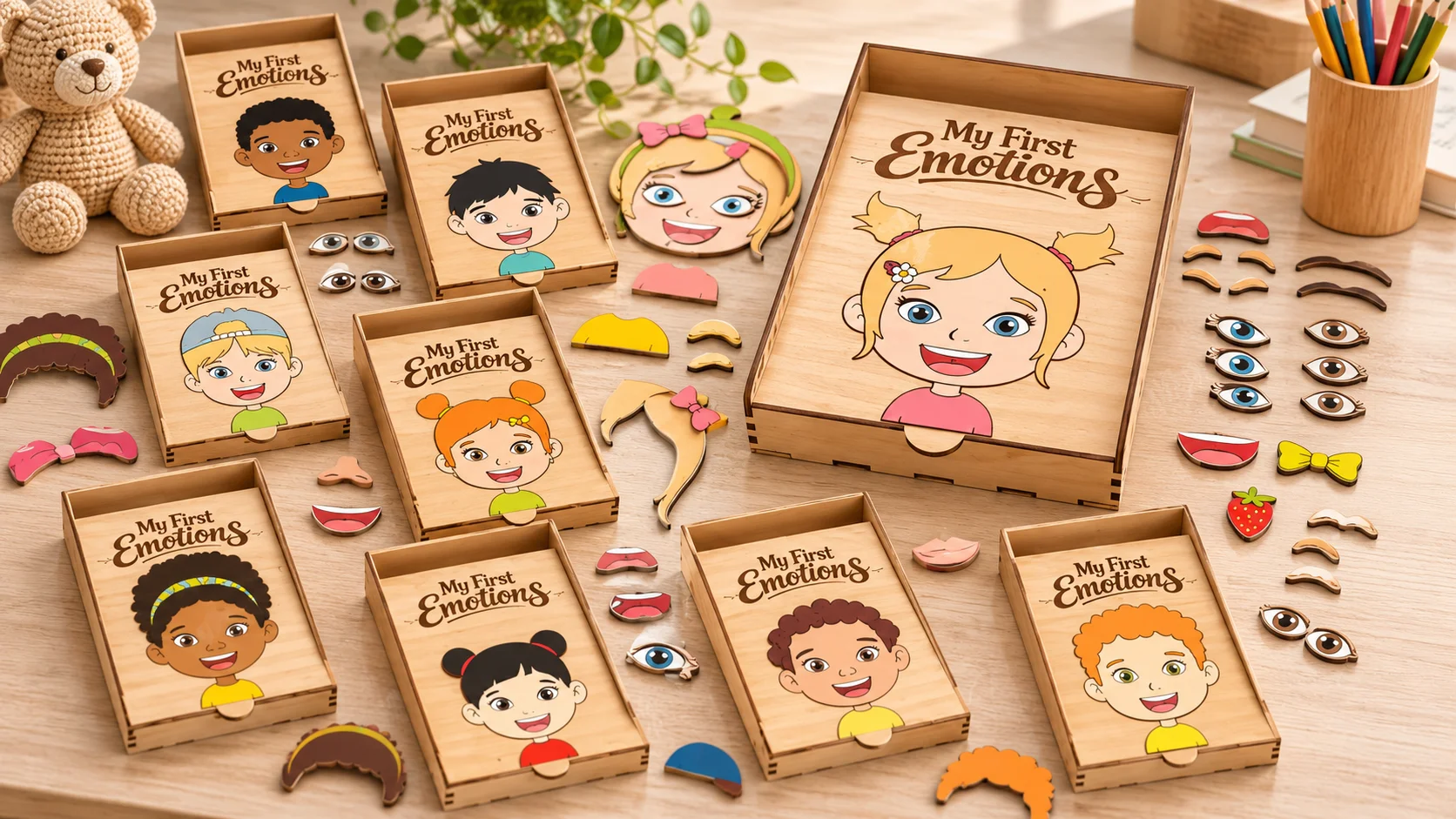
For craft sellers, a particularly useful strategy is to offer a small group of games in the same visual language: matching wood tones, similar packaging, and consistent engraving. One set may be aimed at family game night, another at travel, and a third at puzzle enthusiasts. Designs for classic and modern wooden tabletop games illustrate how many directions are possible before you even move into mechanical models or interlocking 3D construction projects.
There is also room for seasonal collections and gift bundles, especially when several small items can be made from the same material stock. A puzzle, a personalized box, and a miniature play scene might form one coherent gift set. Some repeatable laser-cut play projects lend themselves to variations in size and theme, making them easier to integrate into a production schedule.
Children’s products need a higher standard of care than decorative items. Sand edges, choose appropriate coatings, assess small parts and breakage hazards, and check the applicable safety, testing, and labeling requirements where you sell. An SVG design is not proof that a finished toy is safe. That responsibility is part of building a serious, trustworthy product business.
Laser Cut Earrings & Jewelry
Jewelry shows how a small amount of material can lead to a broad range of finished products. From one sheet of thin wood or acrylic, a maker can cut several styles of earrings, try different finishes, and assemble matching accessories. This makes jewelry a practical category for experimenting with design and responding to customers’ preferences without committing to a warehouse of inventory.
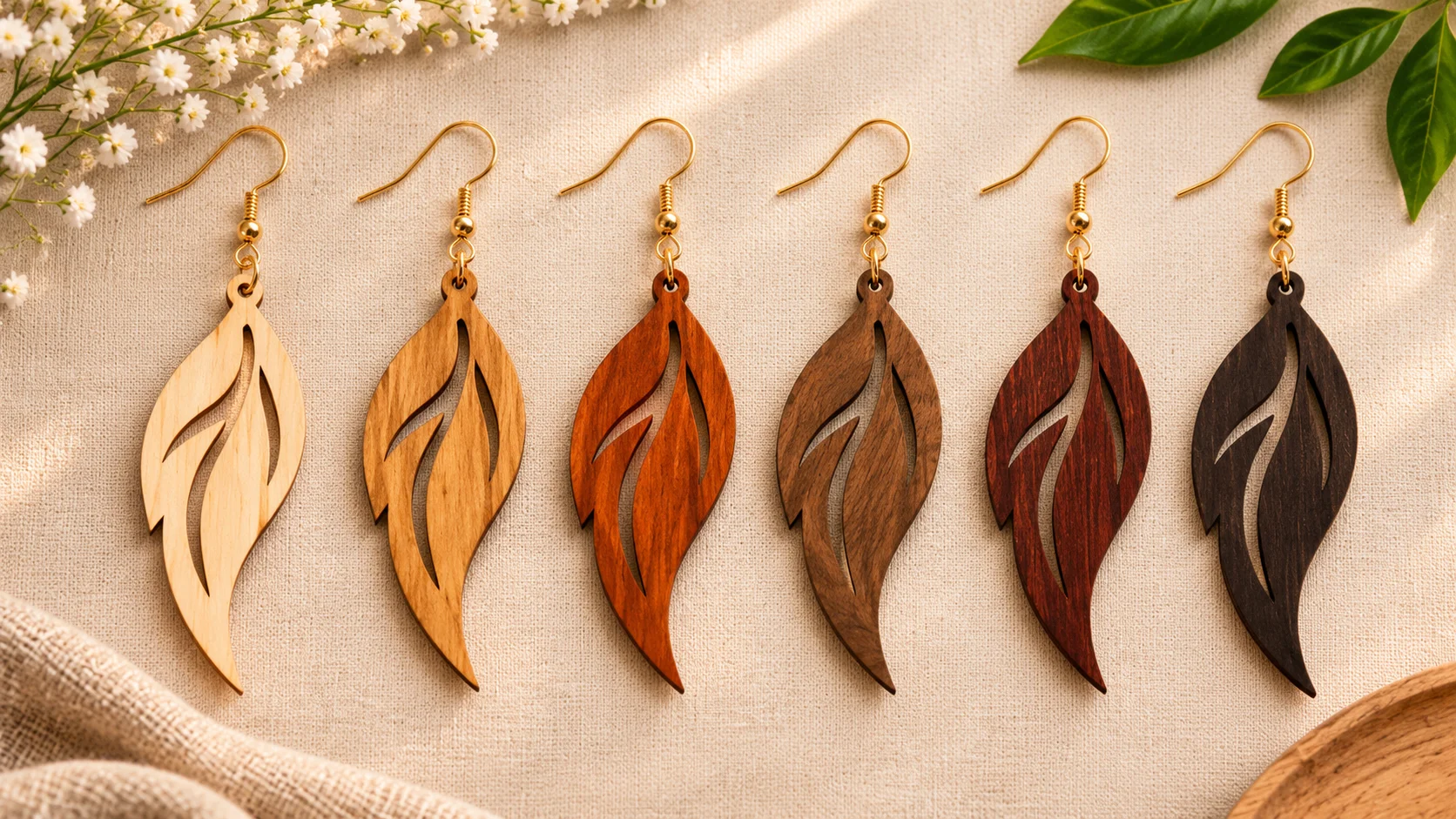
The design options range from geometric studs and lightweight dangle earrings to layered pendants, floral shapes, feathers, celestial motifs, bracelet charms, and matching necklace pieces. Thin birch plywood and basswood suit warm, natural looks, while laser-compatible acrylic can introduce vivid colors, transparent shapes, or modern patterns. Suitable laser-safe leather may be used for flexible accessories. Hooks, posts, jump rings, and other findings add another design choice, including the need for safe skin-contact materials.
A major advantage is that changing the finish can change the character of an entire collection. A simple leaf shape could appear in pale natural wood, dark stain, hand-painted color, or a more delicate openwork pattern. By exploring different shapes and material combinations, you can develop a recognizable style without making every piece completely different. The creative possibilities are wider than the cutting pattern itself.
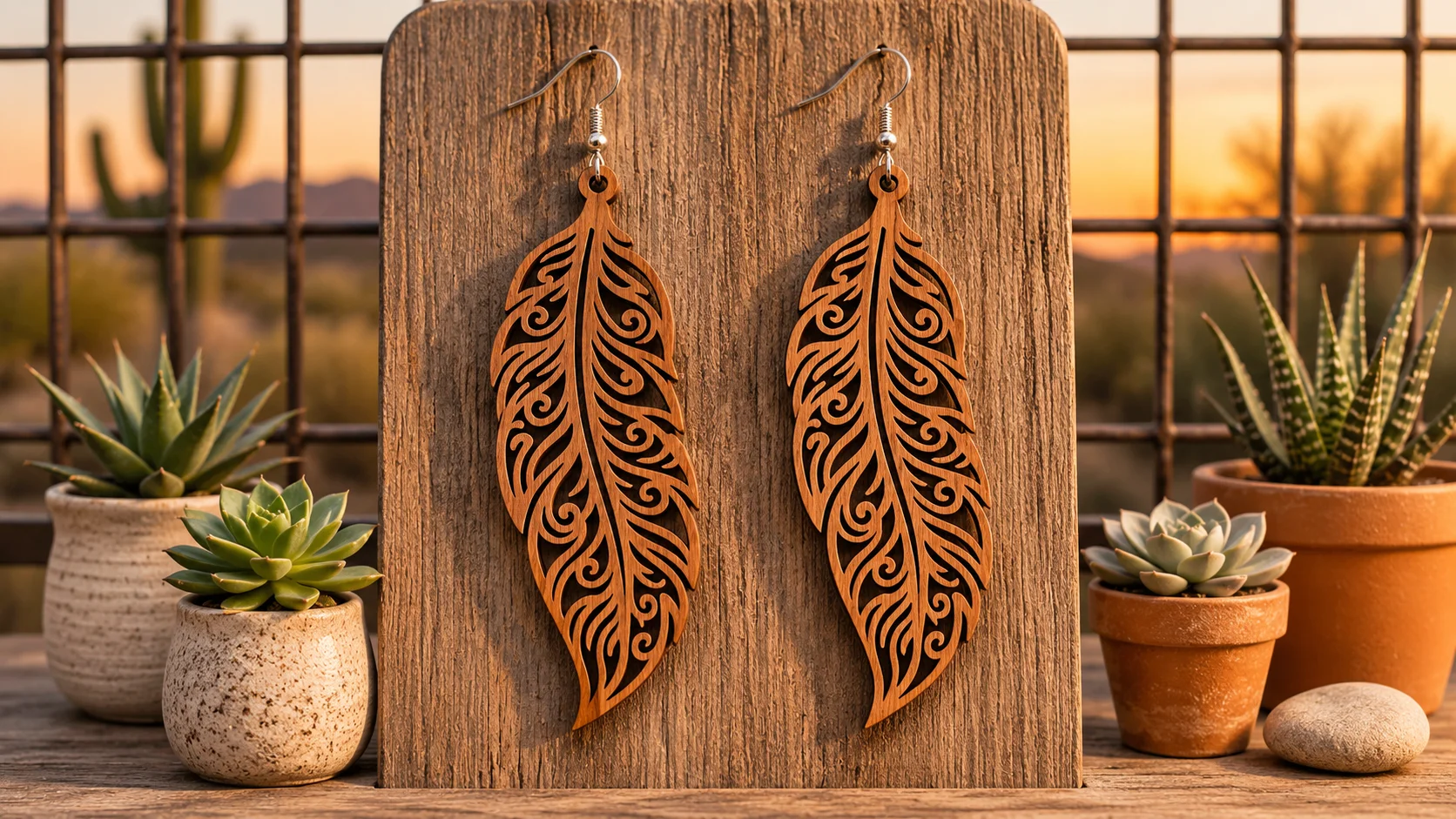
For a small business, this creates a useful production model: start with a few signature designs, then release variations around a color palette, a season, or a customer interest. Botanical jewelry might expand into wildflowers, leaves, and butterflies; geometric pieces might become coordinated earrings and pendants. A broader mix of minimalist and decorative jewelry designs can help identify which style feels consistent enough to become a collection.
Jewelry is also well suited to online sales and craft markets because it is compact and easy to display. Presentation still matters: neat edges, comfortable weight, dependable connections, good product photography, and appealing packaging make a significant difference. Personalized gift cards, coordinating display stands, and small boxes can be made in the same workshop, creating opportunities to combine several laser-cut product lines.
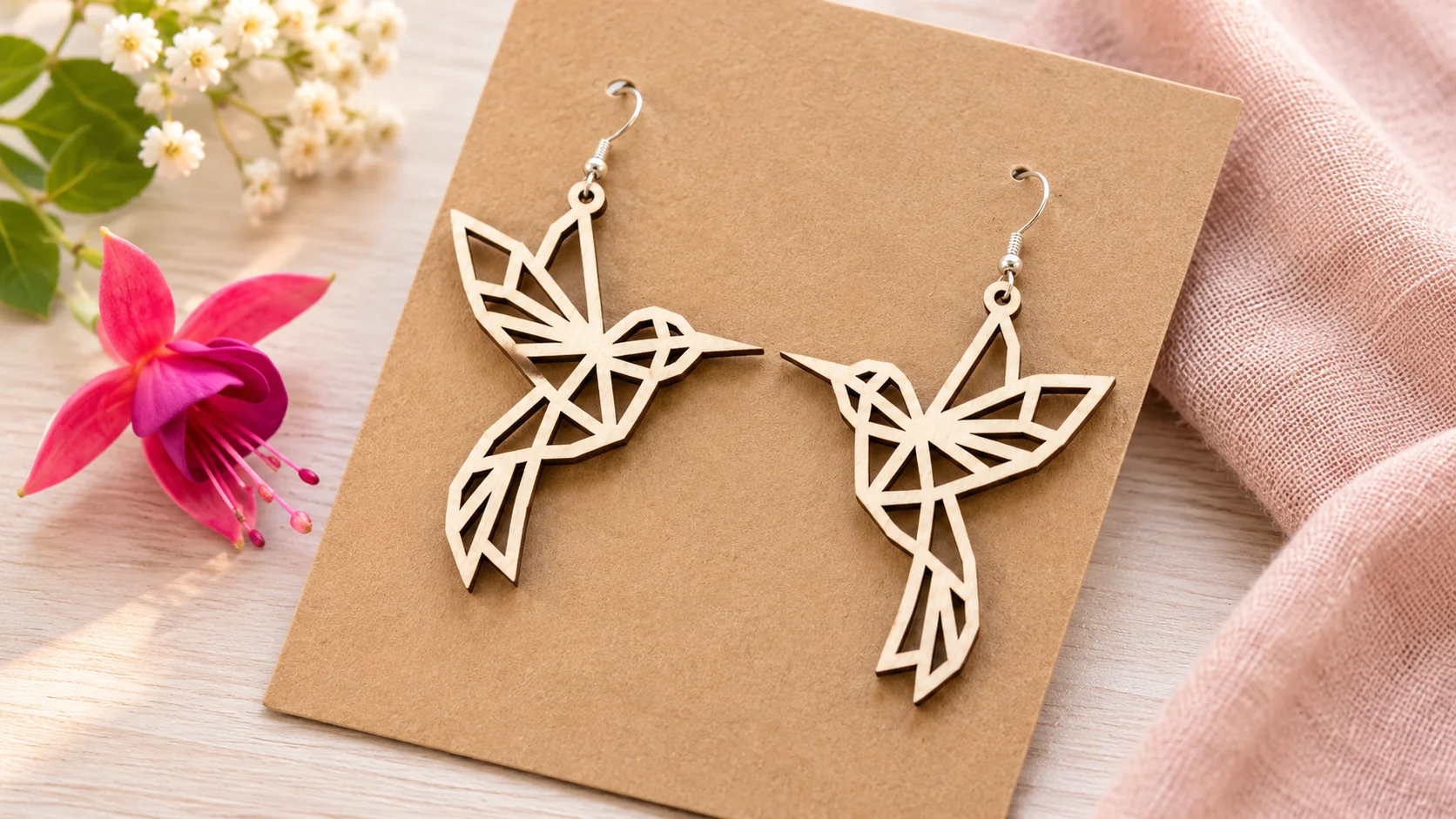
Seasonal demand gives makers a reason to refresh an established range. Floral designs can fit spring collections, sun-and-sea motifs work for summer, and themed accessories can support holidays and special events. A selection of seasonal earring motifs and occasion-based designs can complement everyday pieces without replacing them. The wider jewelry SVG categories also leave room to expand into pendants, layered accessories, and personalized gifts.
The opportunity here isn’t to cut as many earrings as possible. It’s to develop a clear point of view—a style that customers recognize, finishes they can choose from, and a production process that maintains quality. That can be far more useful than a large catalog of nearly identical items.
Laser Engraving SVG Files & Personalized Products
Laser engraving expands the possibilities beyond products cut from sheets. It lets a workshop add names, illustrations, patterns, and branding to compatible ready-made items. A wooden board, slate coaster, leather accessory, or coated drink tumbler becomes a different product once it carries a personal design. For small businesses, engraving adds an important capability: customization without rebuilding the object itself.
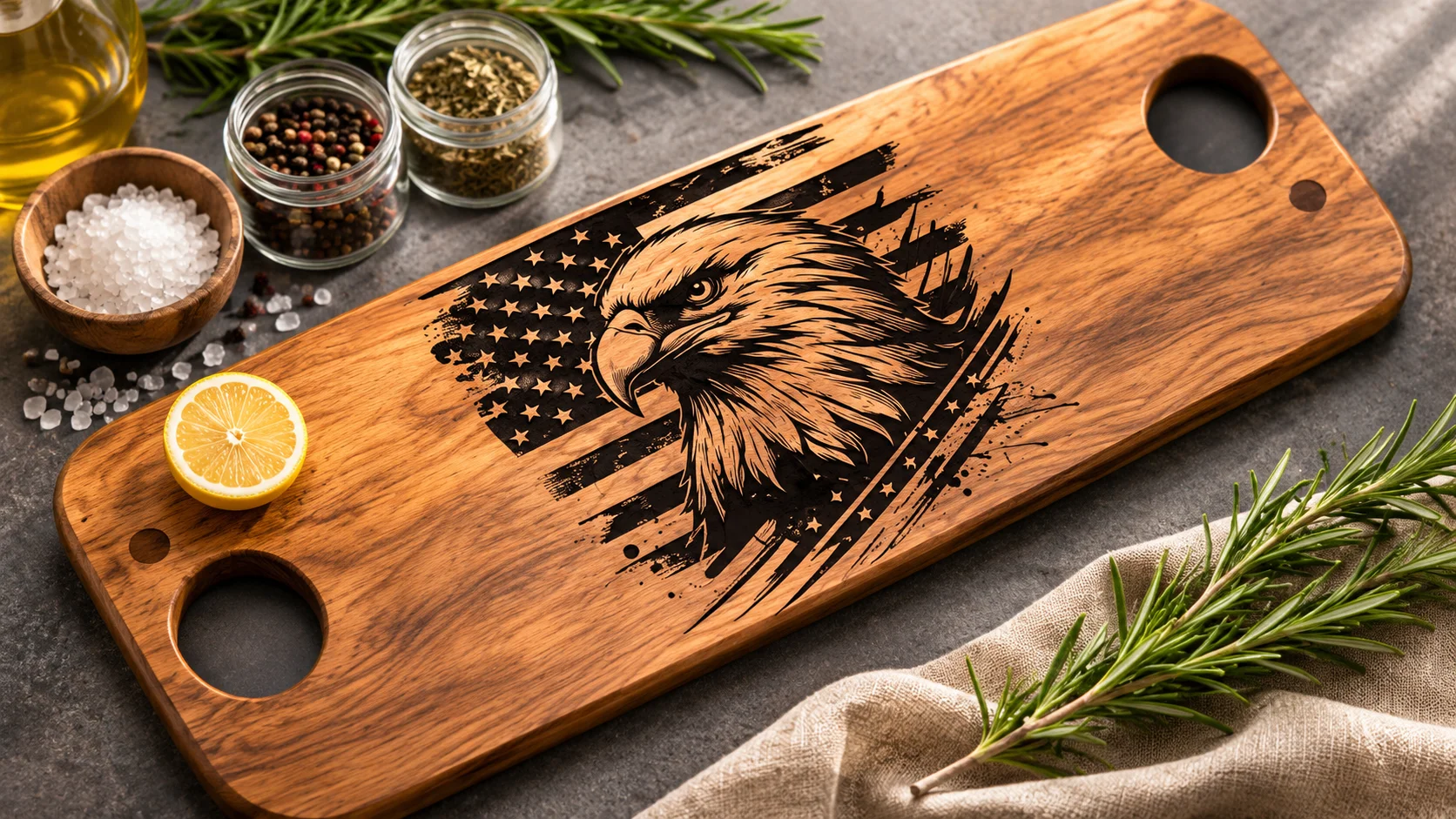
The potential customer groups are diverse. Families order personalized gifts for weddings and anniversaries; local businesses may want branded signage or merchandise; gift shops look for products that suit specific occasions. Engraved serving boards, coasters, bookmarks, keychains, ornaments, plaques, desk accessories, and corporate gifts can all share one underlying production workflow while addressing very different needs.
Materials bring their own character and limitations. Wood and bamboo produce warm, natural-looking engravings; slate offers high-contrast decorative effects; compatible glass, acrylic, coated metal, and suitable leather may work with the right equipment. Not every laser can engrave every material, and not every finish is appropriate for food-contact or skin-contact products. Testing the blank, adjusting power and speed, and checking the intended use are part of the job.
The kitchen and gifting market is a good illustration. A plain board can carry a family recipe, a wedding date, a vineyard illustration, or an engraved border that suits the recipient’s style. That same workshop might make matching coaster sets or presentation boxes. There is plenty of creative room in decorative motifs for boards and small gifts, especially when you combine an established blank with personalized lettering.
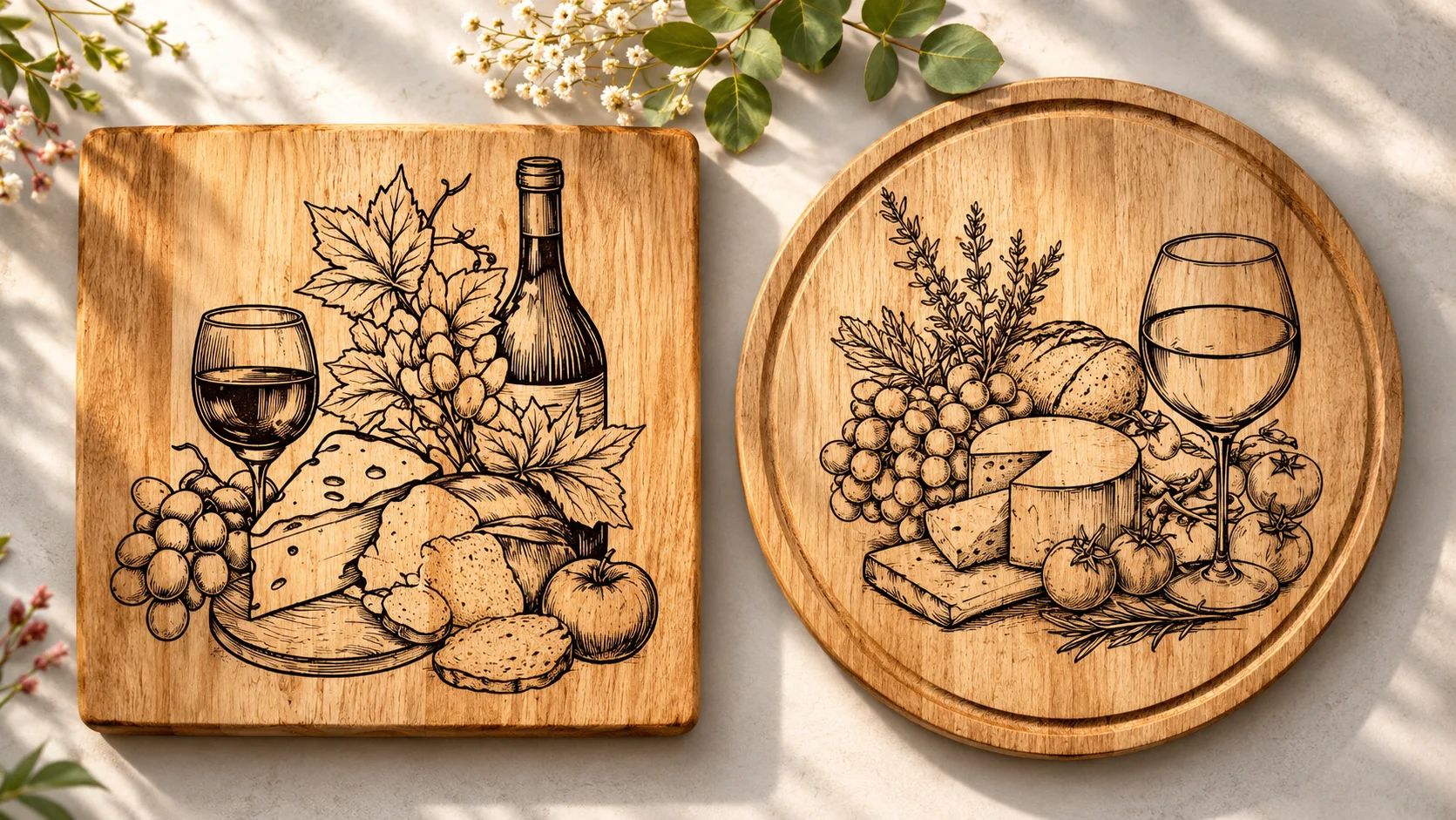
Drinkware and everyday accessories open further doors. A tumbler might be marked with a company logo; a reusable bottle might feature an outdoor theme; a notebook or key holder might carry initials. These items can be sold individually, in small corporate batches, or as coordinated sets. When working with wraps or detailed illustration files, remember that vector paths and raster engraving require different preparation. A successful design is one that works consistently on the actual surface, not just in a digital preview.
Seasonal personalization can bring a familiar product back into focus. A slate plaque becomes winter decor with a festive scene; a wooden ornament carries a date; a simple coaster set becomes a holiday gift. The ability to adapt artwork for different engraved surfaces and gift formats helps a maker build seasonal collections without changing the entire catalog. You can also develop occasion-specific gifts with names, dates, or messages throughout the year.
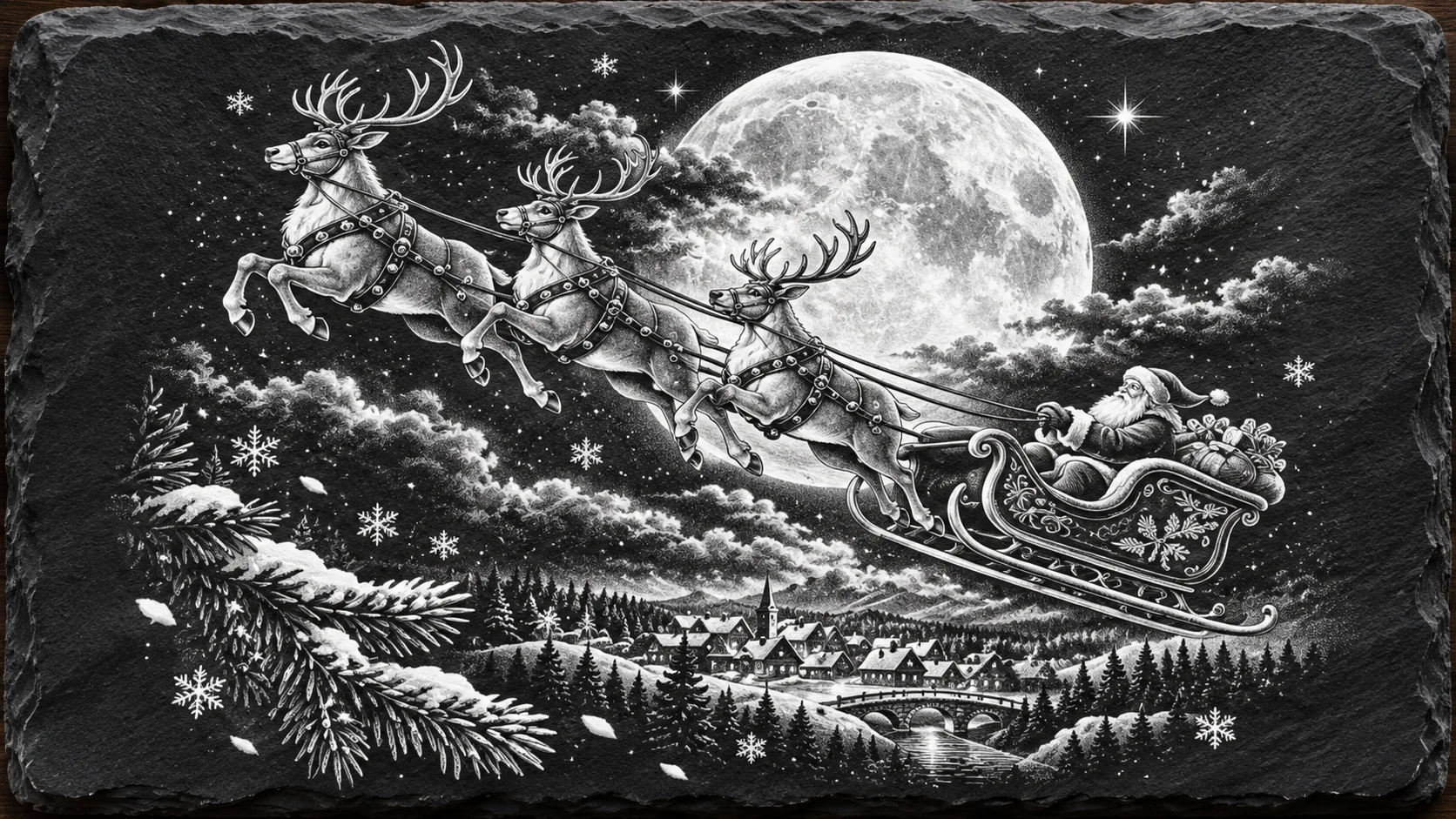
Engraving is particularly powerful when paired with cutting. A laser-cut box can have a personalized lid, a retail stand can carry a shop’s logo, and a wooden game can have an engraved storage case. Those combinations multiply the possibilities of work you’ve already learned to make. The engraving design category offers a useful range of artwork, but the long-term business value comes from learning which materials, blanks, and custom options your customers return for.
Turning Laser Cutting Ideas into a Product Business
The possibilities are enormous, but a successful catalog is built through focus, not by making everything at once. The most promising product line for your workshop is one that fits your machine, the materials you can source, the space you have, and the people you’re able to reach. A diode laser may be excellent for many wooden projects but have different capabilities from a CO₂ machine when working with acrylic. The machine you own should shape your first experiments, not limit your long-term imagination.
Start by choosing a customer rather than a random design. Perhaps you want to serve craft market vendors who need better displays, parents looking for personalized keepsakes, or local businesses that order small branded batches. Make a small collection that addresses that customer’s needs, then offer meaningful variations in dimensions, finishes, colors, or engraving. Reuse parts and construction methods where possible: repeatability makes quality easier to control.
A digital design also needs to survive the realities of production. Test the cutting file in your software, confirm the measurements, allow for the material’s actual thickness, and assemble a finished sample. Calculate more than material cost: include machine time, waste, sanding, finishing, hardware, packaging, selling fees, and your own labor. A product that looks profitable in a photo may have a very different margin once it’s finished and ready to ship.
Photography and presentation are part of the product too. Show the finished item in use, include a clear view of its size, and explain what makes the design adaptable. A retailer needs to see that a stand will hold merchandise; a customer buying a keepsake needs to understand the personalization options. Once you know which items people ask about, develop related products instead of constantly starting over.
The goal is to turn your laser cutter into a flexible production tool: one that can make thoughtful single gifts, small repeatable collections, and custom items that solve practical problems for specific customers.
Frequently Asked Questions
What are some good laser cut products to make and sell?
Display stands, compact organizers, jewelry, wooden games, personalized boxes, and engraved gifts are useful starting categories. They serve different buyers and allow variations in size, material, or branding. The best category depends on the audience you can reach and the work your machine can handle efficiently.
Can one laser cutter support several product lines?
Yes, within its material, power, bed-size, and safety limits. A compatible machine may be able to cut wooden displays, boxes, and jewelry components and also engrave artwork on finished items. The practical range depends on the laser type and what materials are safe to process.
What materials are commonly used for laser-cut products?
Birch plywood, basswood, MDF, and laser-compatible acrylic are common in different projects. Certain woods, slate, suitable leather, and coated surfaces are also engraved. Always verify compatibility; never assume an unknown plastic or coated material is safe for laser use.
Which products are easiest for a small workshop to start with?
Small items such as simple jewelry, compact stands, flat decorations, or personalized tags often require less material and assembly time than large structures. However, the easiest item to manufacture isn’t automatically the easiest one to sell. Consider demand, finishing requirements, packaging, and competition.
Are SVG files enough to start producing products?
SVG and other digital design files help with repeatable cutting and engraving, but you still need tested machine settings, suitable materials, assembly skills, finishing, and a way to present the final product. Different file formats and software can interpret dimensions and operations differently, so check the imported design carefully.
How can I turn one laser-cut design into a collection?
Choose a reliable base construction, then offer practical variations. A display stand can come in three sizes; a box can have several lid styles; an earring shape can be made in different materials; an engraved gift can have multiple personalization options. Keep the variations coherent so the collection looks intentional.
Can I sell finished items made from purchased designs?
You must check the specific design license, any intellectual-property restrictions, and the rules that apply to your intended product. Commercial-use permission for a digital file does not automatically establish that a finished toy, electrical item, food-contact product, or other regulated good is safe or compliant.
How do I know whether a product is worth selling?
Make a few samples, record your true costs and working time, and test how real customers respond. Look at inquiries, repeat orders, and the price people will actually pay. Use that evidence to decide what to improve or produce in larger quantities, rather than assuming any category will be profitable.
Final Thoughts
A laser cutting machine can be a starting point for much more than a collection of decorative projects. It can produce the fixtures that help another business sell, the organizers that make everyday spaces easier to use, the games families keep for years, the jewelry customers choose for its character, and the personalized gifts that mark important occasions. Each of those directions can become a focused product line—and the same workshop can combine them in new ways.
You don’t need to pursue every possibility immediately. Learn what your machine does well, choose the people you want to serve, and make products that are worth using, gifting, or displaying. The real advantage of laser cutting is the freedom to keep adapting: new materials, new designs, new customers, and new opportunities can grow from the skills and tools you already have.